







NRT Through the Years – A Retrospective
|
|


|

| 1988 | ||||
 |
"The Round Table will be providing leadership in the new way we must think about the relationship between the environment and the economy and the new way we must act (…)” |
|||
| 1989 | ||||
 |
David L. Johnston (currently His Excellency the Right Honourable Governor General of Canada) was appointed the founding Chair of the National Round Table on the Environment and the Economy. |
|||
| 1990 | ||||
|
Round tables were established at the national level, in all provincial and territorial jurisdictions and in some municipal government structures across Canada. |
|||
| 1991 | ||||
 |
Members of the NRT's Forest Dialogue reached consensus on 26 principles for the sustainable development of Canada’s forests. |
|||
| 1992 | ||||
|
The NRT joined with provincial and territorial round tables to prepare a set of guiding principles for consensus decision-making. The result was the most widely distributed NRT hardcopy publication - Building Consensus for a Sustainable Future: A User's Guide. |
|||
| 1993 | ||||
 |
The Act to Establish the National Round Table on the Environment and the Economy was passed by Parliament giving the NRT independent status as a "catalyst" for change. |
|||
| 1994 | ||||
|
The Projet de société was a multistakeholder partnership of government, First Nations, business and non-governmental representatives interested in promoting Canada's transition to a sustainable future and building on work begun at the 1992 Earth Summit in Rio. |
|||
| 1995 | ||||
 |
In the wake of the collapse of the East Coast cod fishery, the NRT joined forces with the Newfoundland and Labrador Round Table to launch a Partnership for Sustainable Coastal Communities and Marine Ecosystems. |
|||
| 1996 | ||||
 |
The NRT addressed the issue of Canada's deterioring water infrastructure systems in its report Water and Wastewater Services in Canada. |
|||
| 1997 | ||||
 |
As its contribution to the International Year of the Oceans, the NRT released Sustainable Strategies for Oceans: A Co-Management Guide - designed to help further the use of an integrated approach to managing coastal zones, both in Canada and abroad. |
|||
| 1998 | ||||
 |
The NRT brought together a citizens’ panel of 25 respected Canadians, all recipients of the Order of Canada, in a National Forum on Climate Change to assist Canadians to better understand the climate change issue and its implications. |
|||
| 1999 | ||||
 |
The NRT hosted an international workshop that brought together more than 230 emissions trading experts to share information on national emissions trading programs and plans. |
|||
| 2000 | ||||
 |
The NRT published its millenium report, Achieving a Balance, that identified sustainable development challenges facing Canada in the areas of human health, the natural environment, urban spaces, and the global economy. |
|||
| 2001 | ||||
 |
The NRT report Aboriginal Communities and Non-renewable Resource Development identified measures to ensure that non-renewable resource development in Canada’s North supports economically viable, self-sufficient and socially healthy Aboriginal communities without compromising the ecological integrity of the environment. |
|||
| 2002 | ||||
 |
To broaden awareness and understanding of the concept of greenhouse gas emissions trading among key opinion leaders the NRT held a series of information seminars across the country, reaching more than 1200 people. |
|||
| 2003 | ||||
 |
The NRT released its National Strategy to transform Canada’s brownfields and contaminated sites into economically productive, environmentally healthy and socially vibrant centres of community life, through the coordinated efforts of all levels of government, the private sector and community organizations. |
|||
| 2004 | ||||
 |
The NRT published Environment and Sustainable Development Indicators for Canada, Environmental Quality in Canadian Cities: The Federal Role, and Securing Canada’s Natural Capital: A Vision for Nature Conservation in the 21st Century. |
|||
| 2005 | ||||
 |
Canada's boreal forests comprise 6 million square kilometers, stretching across the north in seven provinces and all three territories and contains the last natural, original forests remaining in the world. This region and its future needs was the focus of the NRT report Boreal Futures. |
|||
| 2006 | ||||
 |
In Capital Markets and Sustainability: Investing in a Sustainable Future the NRT explored the relationship between capital markets, financial performance, and sustainability in Canada. |
|||
| 2007 | ||||
 |
The NRT was mandated by the Kyoto Protocol Implementation Act (KPIA) to conduct research and advise the government on whether or not they could achieve the emissions reductions forecasted in their annual Climate Change plan. |
|||
| 2008 | ||||
 |
The inescapable effects of climate change and air pollution over the next decades require Canada to embark upon a transition to a low-emission society. The NRT report Getting to 2050: Canada’s Transition to a Low-emission Future lays out a series of enabling conditions that should be reflected in Canada’s climate change policy framework. The NRT also released the report Developing Ambient Air Quality Objectives for Canada. On October 30th, 2008, the NRT commemorated its twentieth anniversary by holding a forum to discuss our country’s next climate-policy agenda. |
|||
| 2009 | ||||
 |
The NRT report Achieving 2050: A Carbon Pricing Policy for Canada explored how best to establish a unified carbon pricing policy for Canada – in the form of an economy-wide cap-and-trade system – that would meet Canada’s environmental goals at least economic cost. The NRT also released True North: Adapting Infrastructure to Climate Change in Northern Canada and Geared for Change: Energy Efficiency in Canada’s Commercial Building Sector. |
|||
| 2010 | ||||
 |
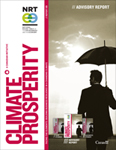
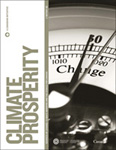
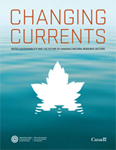
NRT published the first and second reports in its Climate Prosperity series, Measuring Up: Benchmarking Canada’s Competitiveness in a Low-Carbon World and Degrees of Change: Climate Warming and the Stakes for Canada. The NRT program on Water Sustainability and Canada’s Natural Resource Sectors released the report Changing Currents. The NRT also released Progress Through Process: Achieving Sustainable Development Together and Oil Sands: From Debate to Dialogue. |
|||
| 2011 | ||||
 |
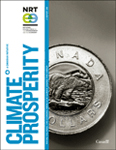
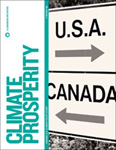
The NRT released the third and fourth reports in its Climate Prosperity series: Parallel Paths: Canada-U.S. Climate Policy Choices, and Paying the Price: The Economic Impacts of Climate Change for Canada. The NRT's second water sustainability report Charting a Course: Sustainable Water Use by Canada's Natural Resource Sectors was also published. |
|||
| 2012 | ||||
 |
The NRT provided Canadian businesses and governments with a roadmap, advice, and case studies on how to cope and prosper through climate change with three reports entitled, Facing the Elements: Building Business Resilience to Climate Change. The NRT also completed two reports to the Minister of the Environment Canada's Opportunity: Life-Cycle Approaches to Sustainable Development and Reality Check: The State of Climate Progress in Canada. |
|||


 © 2013